
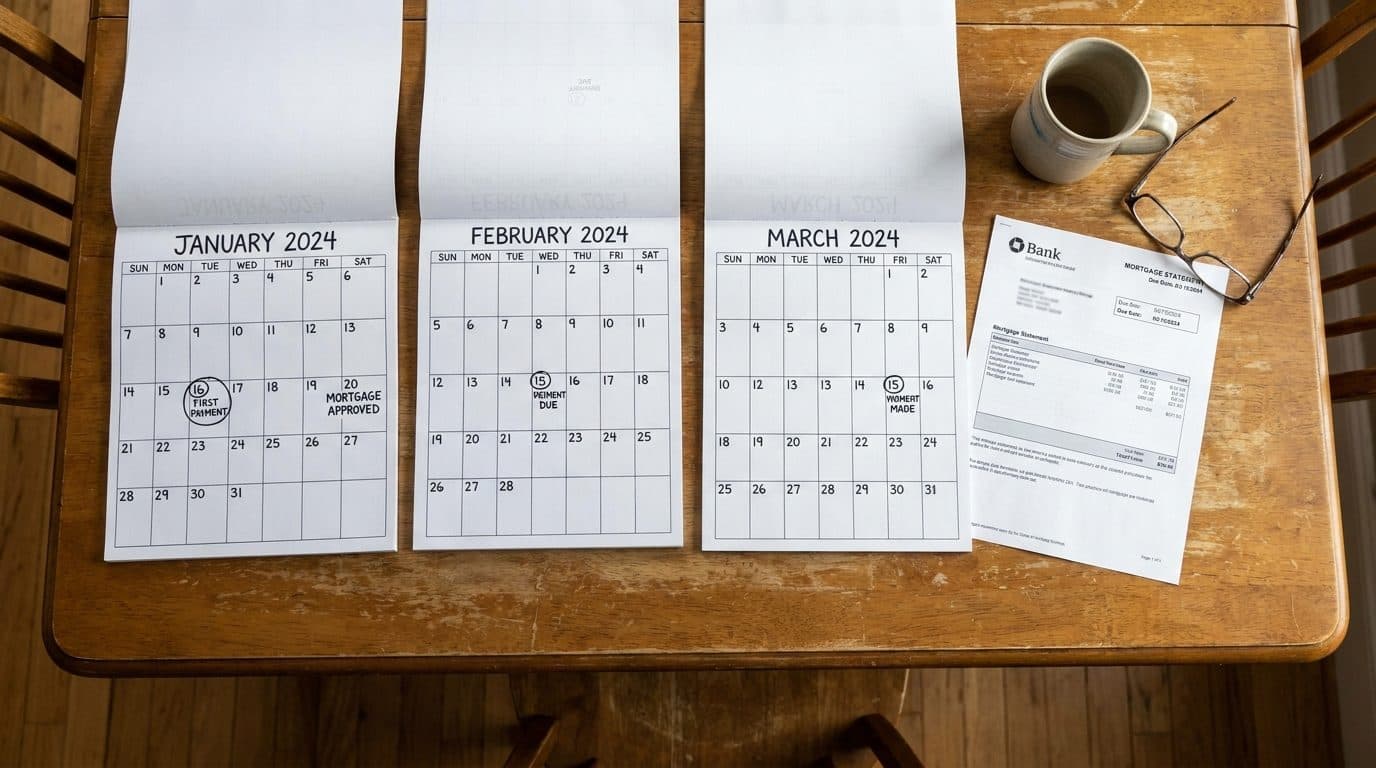
Days 1–30: the first missed payment
Nothing dramatic happens on day one — you'll get a late notice and a fee after the grace period (usually 15 days). This is the single best moment to act: every option on the menu is still available, and servicers are legally required to try to reach you and discuss alternatives starting around day 36.
What to do now: call the servicer before they call you, ask for the loss-mitigation department, and get a free options review. Nothing is 'on your record' yet with the foreclosure machine.
Days 30–90: delinquency deepens
Credit reporting begins at 30 days late. By 45 days, federal rules require the servicer to assign you a point of contact and send written notice of loss-mitigation options. The letters get sharper — but this period is legally protected space: under federal servicing rules, the foreclosure process itself cannot formally begin until you are more than 120 days delinquent.
What to do now: gather your hardship documents and submit a complete loss-mitigation application. Complete applications submitted early carry powerful dual-tracking protections.
Day 120+: the formal process begins
After 120 days of delinquency, the lender can file the lawsuit (judicial states) or record and mail the notice of default (non-judicial states). This is the 'breach letter' and notice stage — deadlines from here are real and state-specific.
What to do now: read every notice for dates. In judicial states, respond to the complaint — an answer alone often adds months. In non-judicial states, note the reinstatement and sale deadlines. This is the moment to get help if you haven't.
Notice of sale: the clock is visible
Weeks to months later (state-dependent), a sale date gets scheduled and advertised. Even now, homeowners routinely modify, reinstate, sell, or file for protection before the date. Lenders postpone sales all the time when a legitimate resolution is in motion — but never assume a postponement you don't have in writing.
The auction — and sometimes after
At the sale, the home goes to the highest bidder or back to the lender. In several states (Michigan, Minnesota, Alabama, Wyoming and others), a post-sale redemption period lets the former owner reclaim the property by paying the sale price — a final, real window.
After the sale comes eviction process and, in some states, disputes over surplus funds — if the auction brought more than you owed, that surplus belongs to you and is worth claiming.
Quick answers
How many missed payments before foreclosure starts?
Federal rules generally prohibit starting the formal process until you're more than 120 days delinquent — roughly four missed payments. State timelines take over from there.
Can foreclosure be stopped once it starts?
Yes, at essentially every stage before the sale: reinstatement, loan modification, repayment plan, selling the home, or bankruptcy's automatic stay can each stop or resolve the process.
General information, not legal, tax, or financial advice. Homeowner Foreclosure Prevention is not a law firm, lender, or government agency. Free HUD-approved counseling: hud.gov/counseling · 800-569-4287.